Moncton sits at roughly 46 meters above sea level, on the banks of the Petitcodiac River. That location brings a specific engineering headache: clay-rich, compressible soils and a frost depth that can reach 1.5 meters in severe winters. Designing a flexible pavement here without accounting for these two factors is a guaranteed path to premature cracking and rutting. We start every Moncton project by correlating the CBR of the subgrade with the expected traffic loads. This isn't a generic approach. It's a direct response to the local geology. For projects near the marshlands or old river channels, we often recommend supplementary in-situ permeability testing to quantify drainage capacity before finalizing the granular base thickness. The goal is a pavement structure that withstands both the spring thaw and the heavy truck traffic on arteries like Wheeler Boulevard.
In Moncton, a flexible pavement design lives or dies by its drainage plan. Frost heave in saturated clay subgrades can lift a road 100 mm in one winter.
Technical details of the service in Moncton
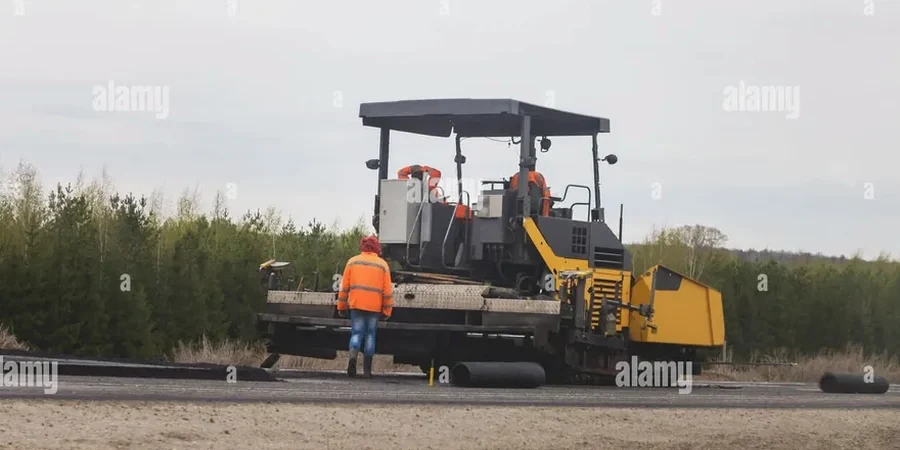
Critical ground factors in Moncton
The urban expansion of Moncton since the 1990s pushed development into the floodplain of the Petitcodiac. The geotechnical consequence is clear: we are building on soft, compressible clays with a high water table. A flexible pavement over these soils acts like a blanket, trapping moisture and accelerating seasonal weakening. The biggest risk isn't the asphalt cracking; it's the subgrade failing in shear under repeated loading. We model this using multi-layer elastic analysis, checking the vertical compressive strain at the top of the subgrade. If the strain exceeds the allowable limit for the design ESALs, the pavement will rut. In these zones, we specify non-woven geotextiles as a separation layer and increase the granular base thickness beyond the standard structural number calculation.
Our services
Our pavement design workflow in Moncton integrates field investigation with mechanistic-empirical analysis. Each phase targets a specific failure mode common to the region.
Subgrade CBR Assessment
In-situ and laboratory California Bearing Ratio tests to determine the strength of Moncton's native silts and clays under saturated conditions, simulating spring thaw.
Traffic Load Analysis
Conversion of mixed traffic data into equivalent single axle loads (ESALs) for a 20-year design life, calibrated for local truck traffic on routes like the Trans-Canada Highway.
Granular Layer Design
Specification of crushed aggregate gradation and layer coefficients, focusing on drainage capacity to prevent frost heave in the base course.
Construction QA/QC Testing
Nuclear density gauge monitoring and proof rolling verification during placement, ensuring compaction meets 98% Modified Proctor for each lift.
Common questions
What is the typical cost for a flexible pavement design in Moncton?
A complete design package, including subgrade investigation, traffic analysis, and structural thickness calculation, ranges from CA$2,290 for a small commercial lot to CA$8,200 for larger industrial or roadway projects. The final cost depends on the number of borings required and the complexity of the drainage analysis.
How does Moncton's frost depth affect the pavement structure?
Frost penetration in Moncton can reach 1.2 to 1.5 meters. We specify a non-frost-susceptible granular layer thick enough to prevent capillary rise of water into the freezing front. This prevents differential heaving and the loss of bearing capacity during the spring melt, a phenomenon known as 'spring breakup'.
Which asphalt binder grade do you specify for Moncton's climate?
We typically specify a PG 58-34 or PG 64-34 performance-graded asphalt binder. The low-temperature grade of -34°C is critical to resist thermal cracking during Moncton's cold winters, while the high-temperature grade handles summer rutting under traffic.