Moncton's growth from a shipbuilding hub on the Petitcodiac River to a modern logistics and IT centre has left a legacy of industrial fill, buried organic layers, and riverside silts that make slab-on-grade a gamble in many parts of town. The historic downtown core sits on a thin crust of weathered till over compressible estuarine deposits, while newer developments push into drumlin fields where bearing capacity varies over short distances. When the upper three or four metres can't deliver the bearing pressure the NBCC requires, the conversation shifts to deep foundations. Our laboratory team handles the geotechnical side of that conversation — running the consolidation tests, undrained shear strength profiles, and pile capacity analyses that turn a problematic borehole log into a buildable design. Because the tidal bore isn't the only thing that moves around here, we often pair pile designs with a CPT test campaign to map the soft clay lenses that core barrels sometimes miss.
The costliest mistake in Moncton isn't choosing the wrong pile type — it's choosing the right pile with soil parameters from the wrong side of the marsh.
Technical details of the service in Moncton
Procedure video
Critical ground factors in Moncton
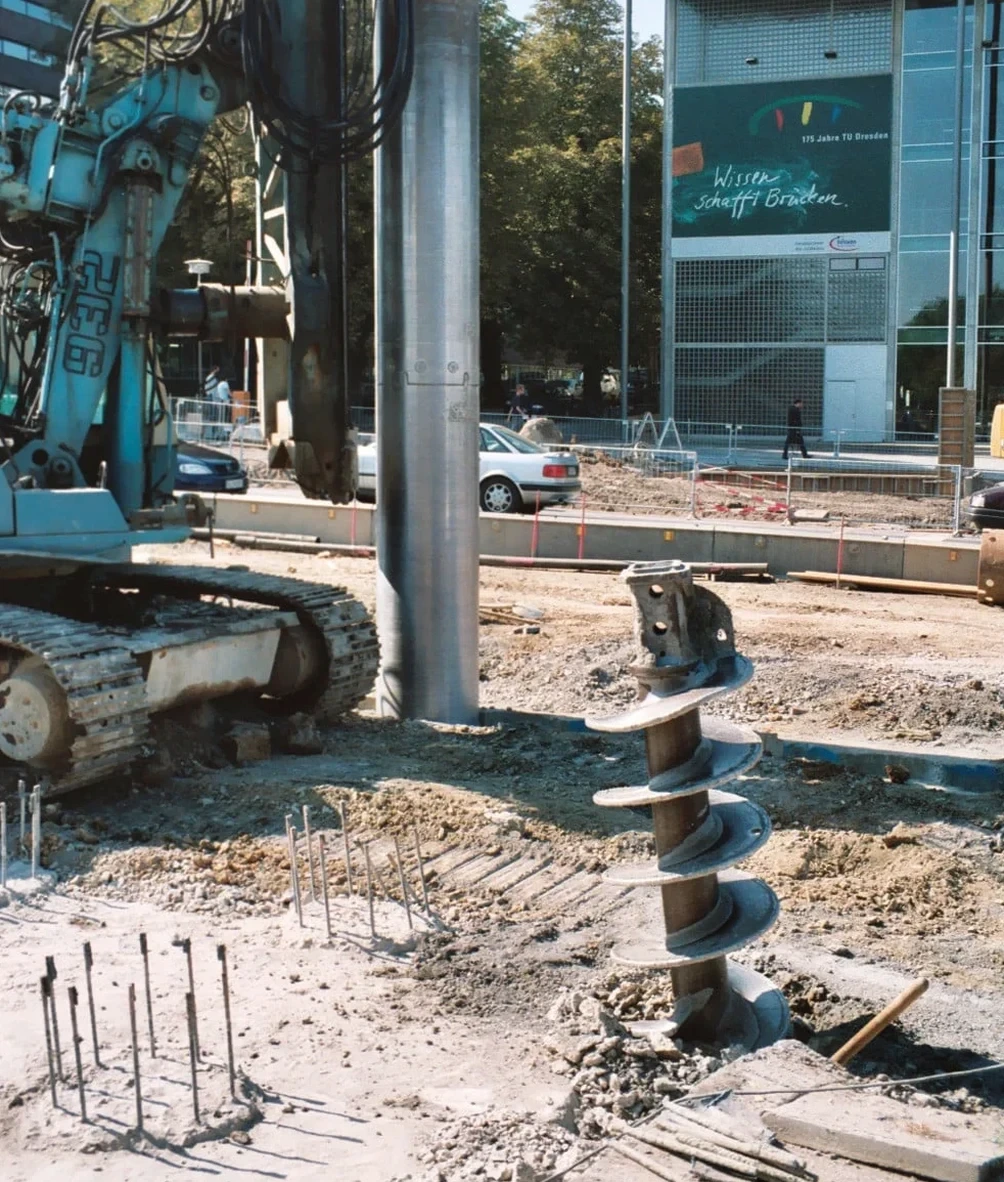
A truck-mounted drill rig shows up, sets up over the planned pile location, and starts advancing — that's the moment every assumption baked into the design gets tested. In Moncton, we've seen rigs push a steel casing through what the log called 'stiff till' and hit a boulder train that wasn't on the geotech report, or punch through a desiccated crust into the grey marine clay underneath and watch the rate of penetration suddenly double. Those surprises break schedules and budgets. Our risk mitigation approach is blunt: we don't design piles from a single data point. We correlate lab triaxial results with in-situ testing, flag the zones where the standard penetration test refusal depth varies by more than a metre between adjacent boreholes, and specify pile load tests when the site stratigraphy gets squirrelly. A plate load test on the working platform can also reveal whether your piling rig will even be able to sit there without settlement problems before the first pile goes in.
Our services
We support Moncton piling contractors and structural engineers with the lab work and geotechnical analysis that feeds directly into pile design. This is the stuff you need before you order steel or schedule a rig.
Axial Capacity Analysis
We calculate shaft resistance and end bearing for driven and drilled piles using lab-measured strength parameters, not just correlations. Outputs include pile capacity tables for different diameters and tip elevations.
Pile Driveability & Wave Equation
For driven piles in Moncton's dense till, we run WEAP analyses to match hammer size to soil resistance, predicting blow counts and driving stresses to avoid pile damage during installation.
Lateral & Group Efficiency Design
We model lateral response under wind and seismic loads using p-y curves calibrated to local soil stiffness, and evaluate group efficiency factors per CFEM recommendations for your specific spacing.
Common questions
What's the typical cost range for a pile foundation design report in Moncton?
For a standard residential or light commercial project in the Moncton area, a complete pile design package — including lab testing, axial and lateral capacity calculations, and a stamped report — generally falls between CA$2,530 and CA$7,770. The spread depends on the number of boreholes we're interpreting, the pile type being evaluated, and whether dynamic testing or a static load test is included in the scope.
How do the Petitcodiac River silts affect pile design here?
Those silts are normally consolidated to lightly overconsolidated, meaning they generate positive skin friction during settlement but can also develop negative skin friction (downdrag) if surrounding fill settles. We measure the consolidation properties in the lab and calculate the neutral plane so the structural load plus downdrag doesn't exceed the pile's geotechnical capacity.
Can you design helical piles for Moncton's soil conditions?
Yes, helical piles work well in many parts of Moncton where the bearing stratum is within 15 to 20 metres. We run torque-to-capacity correlations calibrated to local soil borings, and design the helix configuration based on the undrained shear strength we measure from your site's Shelby tube samples.
What pile type do you recommend most often for the Moncton Industrial Park area?
There's no single answer, but driven H-piles tend to perform well in the dense glacial till found across much of the industrial park. They can be driven to refusal on bedrock without pre-drilling in most locations. We'll still run the numbers on drilled shafts as a comparison, especially if vibration during driving is a concern for adjacent structures.