The Petitcodiac River churns chocolate-brown for a reason. Moncton sits on a deep basin of soft, compressible marine clays and silts. These tidal mudflat deposits define the city's geography, from the riverfront to the expanding suburbs. Boring through this material demands more than standard engineering. You need hyper-local data on consolidation rates and undrained shear strength. Our team runs ASTM and CSA-compliant triaxial tests on Moncton cores almost weekly. The silty clay here behaves differently than the till found just west of town. For projects near the river, we often couple borehole logging with in-situ permeability testing to map groundwater flow paths through the estuarine layers. This data shapes every design decision that follows.
Moncton's soft clay loses up to 60% of its undisturbed strength when remolded. Sensitive clay demands tunneling methods that minimize ground disturbance.
Technical details of the service in Moncton
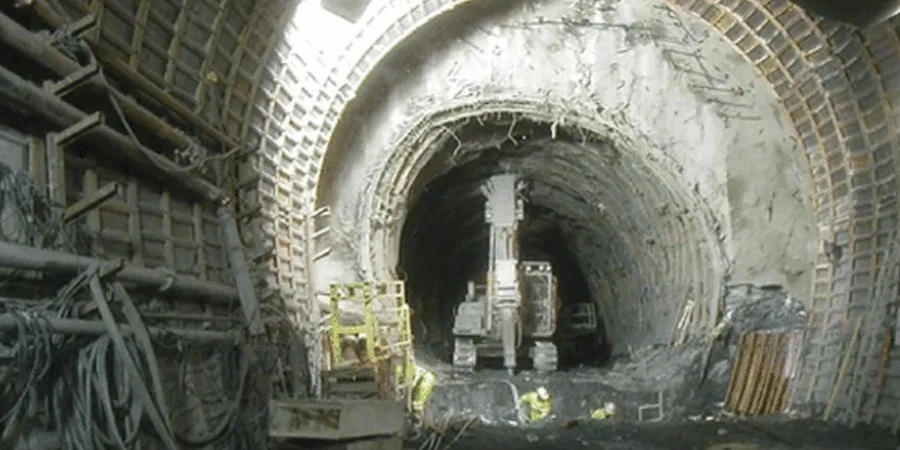
Critical ground factors in Moncton
Moncton logged a population of 79,470 in the 2021 census, growing fast into areas underlain by compressible clays. Volume loss during tunneling in these soils triggers surface settlement bowls that can crack century-old foundations. The tidal bore on the Petitcodiac adds another variable. A two-meter tidal range cycles pore pressures twice daily, accelerating consolidation around shallow tunnel alignments. Face instability occurs when contractors underestimate the perched water tables trapped in silt lenses above the clay. A single blowout can delay a project by months. Our lab defines the exact undrained strength profile so earth pressure balance machines can be calibrated correctly, mitigating these financial and safety risks before the first cut.
Our services
A tunnel in soft ground fails from the face backward. Our Moncton program targets the failure mechanisms specific to the Petitcodiac basin.
Advanced Laboratory Testing on Moncton Core
We run CRS consolidation, CU triaxial with local strain, and constant-volume ring shear on undisturbed samples. These define the strain-softening behavior that governs face stability in Moncton's sensitive silts.
Tunnel Face Stability and Settlement Analysis
Using Plaxis 3D with the Soil Hardening model calibrated to your site-specific lab data. We plot settlement troughs against existing infrastructure and identify the minimum support pressure required to prevent chimney failure in the riverfront clays.
Common questions
What makes Moncton's soil so difficult for tunneling?
The primary challenge is sensitivity. Moncton's marine clays were deposited in a post-glacial sea and have a card-house structure. Remolding from excavation or TBM operation breaks this structure, causing a near-liquid condition. The high water content, typically above 50%, combined with the tidal influence of the Petitcodiac River, means pore pressures are dynamic and hard to control.
How much does a geotechnical analysis for a soft soil tunnel cost in Moncton?
A comprehensive analysis ranges from CA$4,910 for a feasibility-level assessment with limited lab testing to CA$20,460 for a full detailed design package including triaxial, consolidation, and permeability testing on multiple boreholes. The scope depends on tunnel depth, alignment length, and proximity to river structures.
Which lab tests are essential for tunneling in sensitive clay?
Consolidated-undrained triaxial tests with pore pressure measurement are non-negotiable. We also specify oedometer consolidation tests to define the pre-consolidation pressure. When strain-softening is a concern, as it is throughout Moncton's mudflat zone, we add constant-volume ring shear tests to quantify the residual strength of the clay.